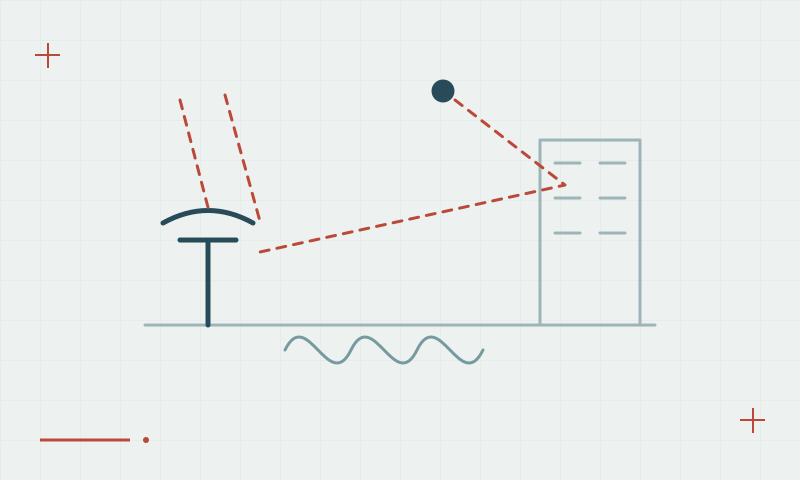
Baseline length: why distance from the reference matters
As the rover moves away from a reference station, some shared error assumptions become less effective.
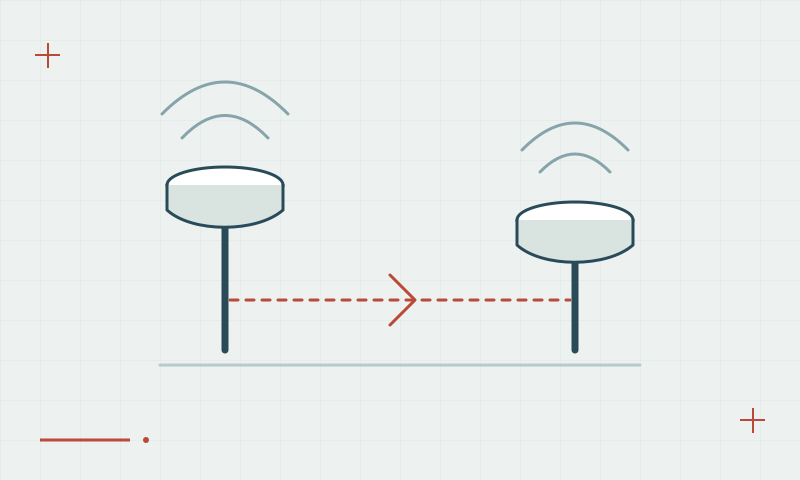
Distance changes the error relationship
Single-base RTK relies partly on errors being similar at the base and rover. Atmospheric conditions and other spatial effects become less correlated with separation. Useful baseline length therefore depends on the system, signals, atmosphere, reference quality and required performance rather than a single universal distance.
Continue learning How RTK GNSS turns observations into precise positions
Plan around evidence from the site
Use the provider or equipment guidance and verify results on independent control across the work area. A stronger radio may extend communication without extending the reliable measurement range by the same amount. If the project spans a large area, review the reference strategy before collecting all points.
Continue learning Choosing a suitable GNSS base station site
Practical checklist
- Separate radio range from positioning performance.
- Check control near and far from the reference.
- Review reference coverage for large survey areas.
Plan your GNSS setup
Compare the EQ10 and EQ20 receiver specifications, then discuss the configuration and support your project needs.
Compare GNSS receivers