Multipath: when GNSS signals take an indirect route
Buildings, metal surfaces and other reflectors can distort the observations a receiver uses.
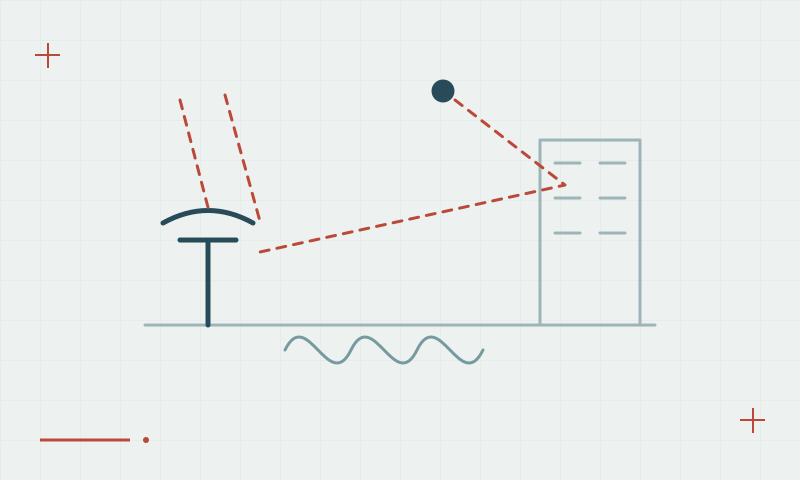
A reflected signal is not the direct path
Multipath occurs when reflected signal components reach the antenna together with, or instead of, the direct signal. Nearby structures and surfaces can change these effects over short distances. A high satellite count or an RTK fixed indicator does not prove that reflected observations have become harmless.
Continue learning GNSS under tree canopy: planning around signal obstruction
Respond with observation design
Where practical, change the measurement location or use an appropriate offset method tied to clear-sky control. Document obstructed points and collect independent checks. Antenna selection and receiver processing help manage reflections, but field geometry and repeat observations remain important when a deliverable needs defensible coordinates.
Continue learning GNSS near buildings: working in an urban canyon
Practical checklist
- Identify likely reflecting surfaces around the point.
- Prefer clearer observation geometry where possible.
- Collect an independent check for critical measurements.
Plan your GNSS setup
Compare the EQ10 and EQ20 receiver specifications, then discuss the configuration and support your project needs.
Compare GNSS receivers